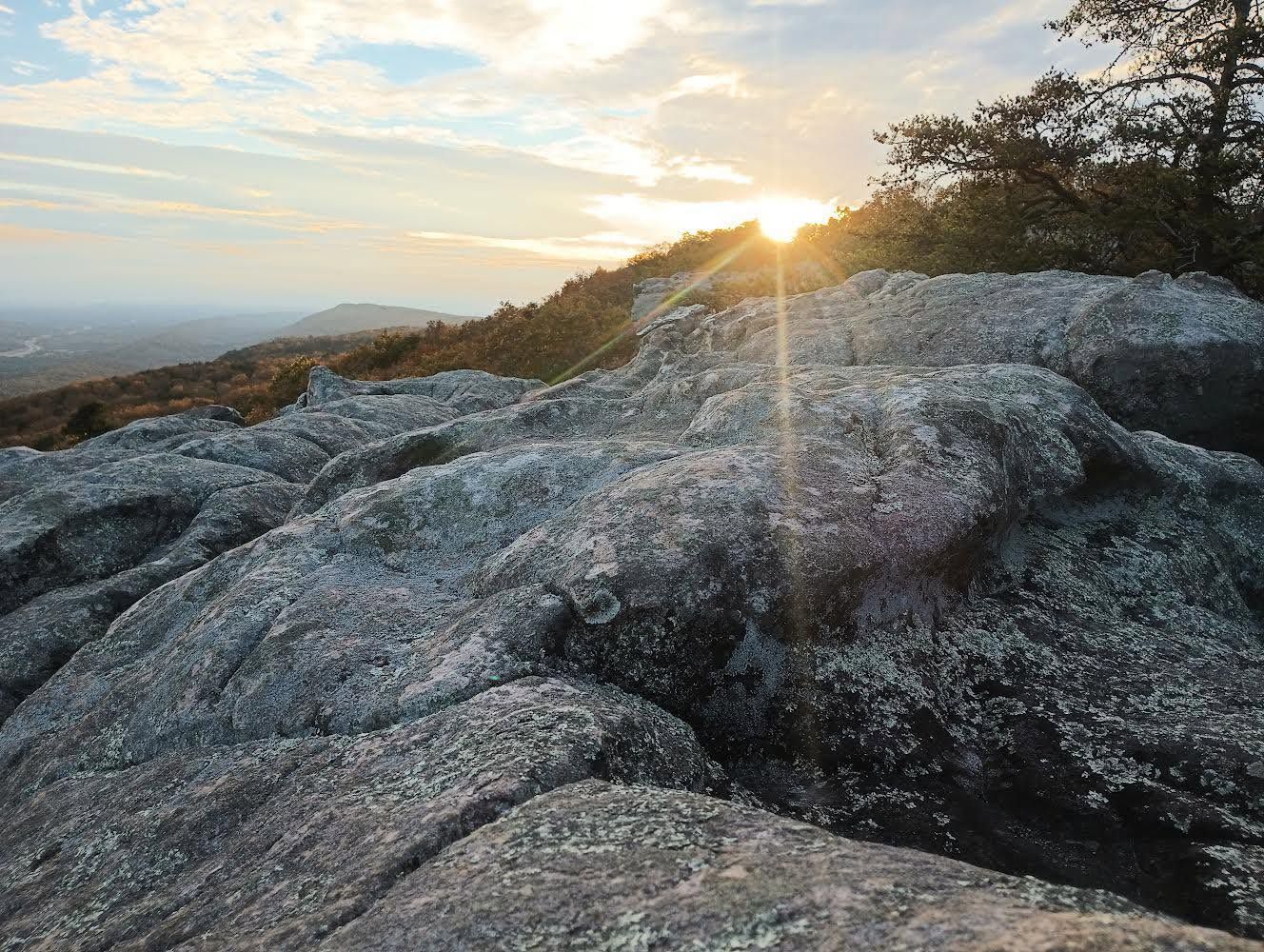
Walk through Cherokee Rock Village and the geology is impossible to separate from the experience of the park. Massive sandstone formations rise near the summit. Narrow corridors wind between towering rock faces. Climbers follow cracks and features up the stone, while hikers, campers and visitors move through the spaces between the formations. The rock is what makes Cherokee Rock Village what it is. Across much of the summit, sandstone lies close beneath the surface. The soil that supports grasses, wildflowers, shrubs and trees can be relatively thin, including many of the same areas where people camp, climb, hike, and gather. These natural features and recreational uses exist together, and understanding that relationship is an important part of caring for Cherokee Rock Village. In heavily used areas, normal wear can thin vegetation and expose the ground beneath it. Where soil was already shallow, there may be little available to lose before bedrock begins to show through. The same geology that created the formations people come here to experience also helps determine how water moves across the landscape, where soil can accumulate, where plants can grow, and how much disturbance some areas can withstand. To understand why some parts of this landscape can be especially sensitive to change, we must look to the rock beneath our feet.
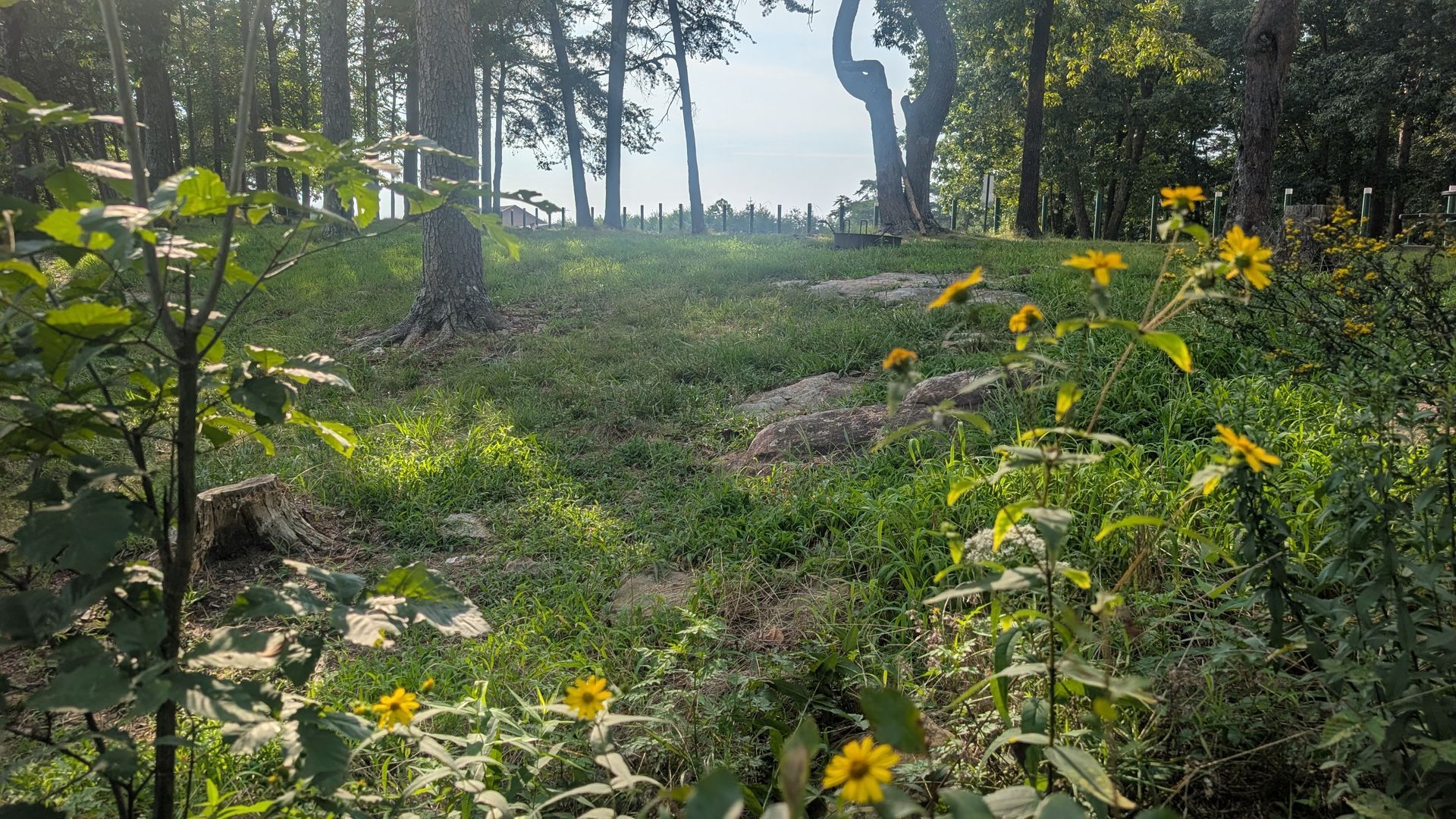
If you live in northeastern Alabama, you know how quickly spring can turn into summer. In spring, the landscape seems to wake up almost overnight. Grasses turn green, wildflowers begin blooming and new growth appears across the region. By June, the heat and humidity have settled in, and that gentle spring growth is facing a much tougher season. Summer rain here does not always arrive slowly. It often comes from isolated thunderstorms that drop a great deal of water in a short amount of time. At Cherokee Rock Village, that water can rush across sloping ground and thin, rocky soil before it has time to soak in. On the heavily used summit where the park’s campground resides, heavy rain carries exposed soil away and gradually carves pathways into the ground. With each storm, those pathways can grow deeper, allowing water to move faster down the mountain and cause further erosion around hiking trails, climbing areas and the surrounding landscape. As we wrapped up the spring season, we paused mowing wherever naturally occurring native plants were growing, including throughout our camping areas. This gave native grasses and wildflowers time to mature, flower and form seed. As we move into August, we are beginning the next stage of our selective summer mowing practices. Using mowers and weed trimmers, we cut only the upper few inches of the vegetation, helping scatter mature seed while leaving as much growth standing as possible. This makes the camping areas more usable while maintaining the groundcover needed to protect the soil during the hottest part of the year.